The Rooftop Is Not a Venue. It Became One.
How real-estate pressure, noise ordinances, and brutal afternoon heat turned São Paulo's rooftops into one of the most distinctive event formats in Latin American electronic music.
The Pressure That Made the Format
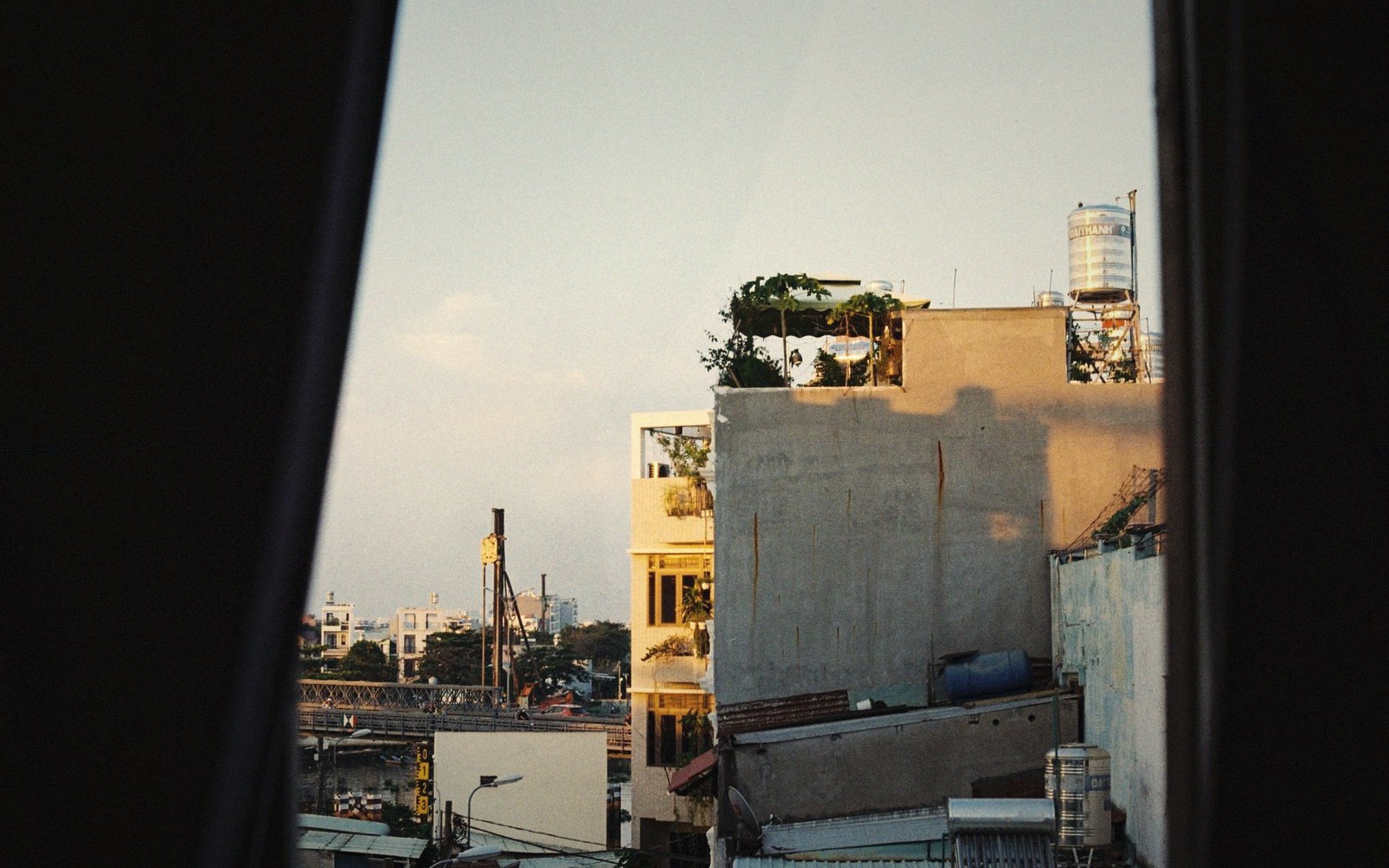
São Paulo's relationship with its own noise is complicated. The city generates more of it per square kilometre than almost anywhere in the Americas, yet municipal ordinances — tightened in waves across the 2000s and 2010s, particularly around residential zoning in the inner boroughs of Pinheiros, Vila Madalena and the centro histórico — made it progressively harder to operate a basement or ground-floor venue without provoking a complaint, a fine or a shutdown. The result was a slow redistribution of where electronic music actually happened.
Rooftops offered a partial workaround. Sound dissipates upward faster than it travels through a shared wall; neighbours are not below you; and in a city where vertical construction has consumed almost every spare plot, many buildings already had flat concrete laja (roof slab) surfaces large enough to hold a modest rig and several hundred people. Promoters noticed this before architects did. By the early 2010s, a cluster of buildings across the centro and the inner west had been quietly converted into semi-regular event spaces that existed nowhere in any licensing register. They did not advertise addresses publicly. They circulated through apps, messaging chains and word of mouth.
Afternoon as Architecture
What made São Paulo rooftops genuinely different from their counterparts in Berlin or Brooklyn was the heat constraint, which turned out to be a creative one. Sub-bass frequencies behave unpredictably in open air — they lose the room gain that gives them punch in an enclosed concrete box, dispersing before they resolve — and this pushed the sub-bass physics problem that producers in enclosed São Paulo baile spaces had been solving for years into a new register entirely. The sound systems deployed on rooftops tended to emphasise midrange warmth and upper-bass definition over the bone-rattling low end that characterises an indoor baile rig. Rigs ran lighter, partly because load-bearing capacity on a domestic laja is a genuine engineering constraint, and partly because moving a full touring stack up a service staircase is simply not viable.
The heat — São Paulo sits at roughly 800 metres above sea level, its Novembers running close to 35°C in direct sun — forced a temporal logic that ended up shaping the music. Events began around midday, peaked between four and seven in the evening, and wound down well before midnight. This was not a curfew so much as a climate concession. The DJ sets booked into that window had to work differently: building energy in full daylight, carrying a crowd whose bodies were already working against the temperature, hitting a peak around golden hour when the light was doing as much work as the sound, and then releasing. Tracks chosen for that arc tend to run slightly faster and cleaner in the low end than what works at two in the morning in a sealed room. Producers who played rooftops regularly began to hear the difference in their own track selection and, eventually, in their own output.
The Social Geometry of No Walls
The rooftop format did something else that was harder to plan for: it removed the visual and acoustic enclosure that structures behaviour inside a club. Without walls, the geometry of the floor became fluid. People moved to the edges, faced outward over the city, turned away from the sound source. The relationship between dancer and speaker stack was no longer one of immersion but of exposure — to the skyline, to the ambient roar of the city below, to each other in unmediated daylight. Communities that had been marginalised in the darker, more gatekept spaces of São Paulo's formal club circuit — queer collectives, Afro-Brazilian arts networks, diaspora groups with no foothold in the established venues — found the rooftop's informality useful. There was no door in the traditional sense, no face control conducted in a corridor. Entry was handled upstream, by the invitation chain itself.
This social openness was not incidental to the music. Collectives that built their early audiences on rooftops developed a different relationship to their crowd than those who grew up inside licensed venues: more lateral, less transactional, more dependent on communal trust to bring people back. Several of the producers and selectors who emerged from São Paulo's rooftop circuit in the 2010s have spoken publicly about the format as formative — not because it was technically superior to a proper room, but because it demanded a kind of fluency with an audience that indoor formats let you avoid.
The city has not stopped pressing. Real-estate values in the inner boroughs have continued to climb, and several of the buildings that hosted rooftop events regularly through the mid-2010s have since been redeveloped or sold. But the format has proved more portable than any single address. It migrated: to satellite towns, to industrial zones in the east zone, to new buildings whose owners were willing. What was a workaround became a genre of its own — not a venue type but an event logic, specific in its physics, its timing, and what it asked of the music.
Related on the spine
Filed in The Floor. Every piece on this site is filed by the tempo it sits at rather than by genre or city — browse the whole spine.