What Is Left of a Cumbia When You Take Twelve BPM Off It
Slow a cumbia digital track by twelve BPM and you have not made a slower version of the same thing — you have made a different object.
The Arithmetic of Space
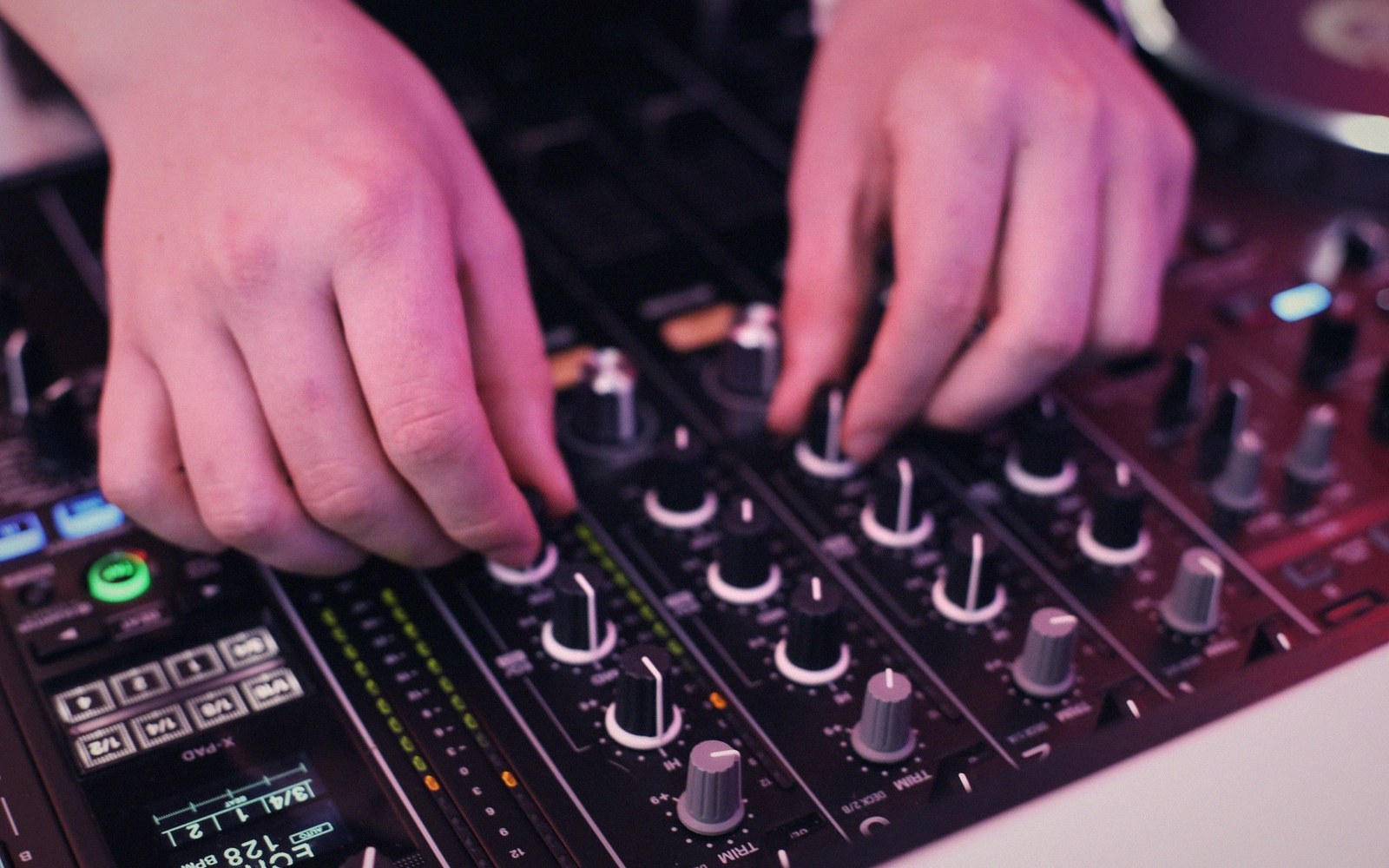
Start with a concrete example. A cumbia digital track running at 92 BPM places its kick-drum pattern inside a grid where each beat lasts roughly 652 milliseconds. Drop to 80 BPM and that same beat now lasts 750 milliseconds — nearly a tenth of a second longer. That gap sounds trivial until you consider that the ear resolves rhythmic intention in windows of around 30 to 50 milliseconds, which means the space between kick hits at 80 BPM is not merely longer but qualitatively different in how it registers. The pattern has not stretched; it has opened. And when a rhythmic pattern opens, the things inside it — the bass, the harmonic material, the crowd's body response — all renegotiate their relationship to one another.
Cumbia digital (the broad family of digitally produced cumbia forms that spread outward from northern Argentina and Colombia through the 1990s and 2000s) carries a characteristic rhythmic skeleton: a kick that falls on the downbeat with a secondary hit or roll toward the back of the bar, usually accompanied by a syncopated bass figure that anticipates the beat. At 92 BPM, that anticipation is tight — the bass feels like it is reaching forward eagerly, leaning into the next bar. At 80 BPM, the same notated bass line no longer reaches; it lands, settles, and waits. The character of the phrase shifts from forward momentum to a kind of gravitational pull. Producers who understand this do not simply pitch a track down. They rewrite the bass.
The question this creates for a DJ playing a cumbia digital set is not whether the slower material feels better or worse. It is whether it still functions as cumbia at all — whether the cumbia's role as a common rhythmic reference point across the region still operates when the tempo dips below the range where most listeners carry cumbia in their body memory.
What the Bass Does at 80
Low-frequency bass behaviour changes with tempo in a way that is physical before it is musical. A sub-bass note held for 750 milliseconds vibrates differently in a room than the same note held for 652 milliseconds — not because the frequency of the note changes, but because the room mode (the resonant behaviour of the acoustic space itself) has more time to develop. In practical terms: at 80 BPM, the sub frequencies bloom. A bass note that at 92 BPM was a short punch of pressure becomes, at 80 BPM, a sustained wash that can interact with room resonance, generating combinations of constructive and destructive interference that a faster track simply never reaches. In a small baile space with concrete walls — the most common environment for cumbia digital — this is not subtle. The chest cavity feels it differently.
This is partly why slower cumbia digital can feel heavier without necessarily being louder. The weight is a function of duration as much as amplitude. Producers working at lower tempos frequently take advantage of this by writing bass lines that sustain into the beat rather than cutting before it — a technique that would create mud at higher BPM but at 80 reads as a purposeful roll of pressure arriving just before the kick. The timing window that makes this possible is only available when the tempo is slow enough to let the sub bloom and decay before the next figure arrives.
Harmonic material behaves differently too. Melody in cumbia digital is typically delivered through a few tight, cyclically repeated figures — keyboard stabs, accordion samples, short brass phrases. At 92 BPM, these figures sit inside the groove by necessity; there is simply no room to hear them as separate from the rhythmic texture. At 80 BPM, they begin to detach slightly from that texture and become audible as melodic content in their own right. This changes what a listener tracks. At higher tempos, the experience is predominantly rhythmic and textural. At lower tempos, the melodic figures come forward, and a track that was a groove machine reveals that it also has a chord sequence, a harmonic character, sometimes even something like a song.
Whether that revelation serves the track depends entirely on what the harmonic content is. Producers who have composed their chord progressions knowing they will be heard this way — who have written the keyboard figure for the melodic clarity a slower tempo will expose — benefit from the deceleration. Producers who have used the speed as cover for thin or repetitive harmonic material find that slowing down is an act of exposure.
The Crowd Does Not Agree With Itself
The physical response of a dancefloor to tempo change is not uniform, and the 80–92 BPM range is a zone where two different physical vocabularies of cumbia movement are in active competition. The traditional cumbia step — a side-to-side weight shift with a particular hip articulation rooted in the Colombian coastal form — is calibrated for a range somewhere around 90 to 96 BPM. Below that, the step either has to slow artificially or it has to acquire additional subdivisions to fill the expanded space between beats. Neither option is inevitable; different regional traditions resolve the problem differently. Argentine cumbia digital crowds tend to fill the slower grid with additional hip movement, essentially double-timing the body relative to the beat. Colombian-influenced dancers are more likely to maintain the step structure and let the slower tempo produce a more deliberate, weighted movement style.
What this means at a practical level is that a DJ who drops tempo significantly within a cumbia set is not making an aesthetic choice in a vacuum — they are actively selecting which bodies in the room are going to find their groove most immediately, and which are going to need a bar or two to recalibrate. The experienced DJ uses this moment deliberately, usually dropping the tempo change in at the natural break of a track, giving the floor a phrase to adjust before the groove locks back in. The floor that recalibrates together performs a collective rhythmic act; the floor that never finds the new tempo is a DJ error.
What Survives the Drop
When all of this is accounted for — the bass bloom, the harmonic exposure, the changed movement vocabulary — what is genuinely cumbia about a track running at 80 BPM?
The argument that it is no longer cumbia is understandable but ultimately wrong. What defines cumbia digital as a form is not a specific tempo but a specific relationship between the kick pattern, the bass anticipation, and the syncopated mid-frequency percussion. That relationship can hold at 80 BPM. It is under more pressure there — the gaps are wider, the bass is more exposed, the melodic content is harder to hide behind speed — but the structural logic of the rhythm is intact. A slow cumbia is a more demanding cumbia for both producer and dancer. It cannot rely on momentum to carry weak material through. Every element has to justify its presence in a wider temporal space.
The records that succeed at the lower end of this range are typically the ones where the bass line was written as a melodic statement rather than a rhythmic placeholder, where the kick pattern has enough internal variation to remain interesting when heard slowly, and where the percussion has genuine polyrhythmic texture rather than a simple loop. These qualities are also what makes the best cumbia digital records rewarding across multiple listens — the slow version reveals what the fast version assumed you were not noticing.
Twelve BPM is a deceptively large number in a genre whose canonical tempo range spans perhaps twenty BPM total. Dropping twelve does not take you to the edge of the form; it takes you to a different territory inside it, one where the room physics are changed, the dancer's body memory is challenged, and the harmonic writing is suddenly audible in full. What is left of a cumbia when you take twelve BPM off it is a cumbia with nowhere to hide — and in the right hands, that is the more interesting object.
Related on the spine
Filed in The Spine. Every piece on this site is filed by the tempo it sits at rather than by genre or city — browse the whole spine.