The Box on the Table: Drum Machines That Made the Sound
Affordable hardware with limited outputs and fixed voicings shaped Latin American electronic music more decisively than any professional studio chain.
The Wrong Tool for the Right Room
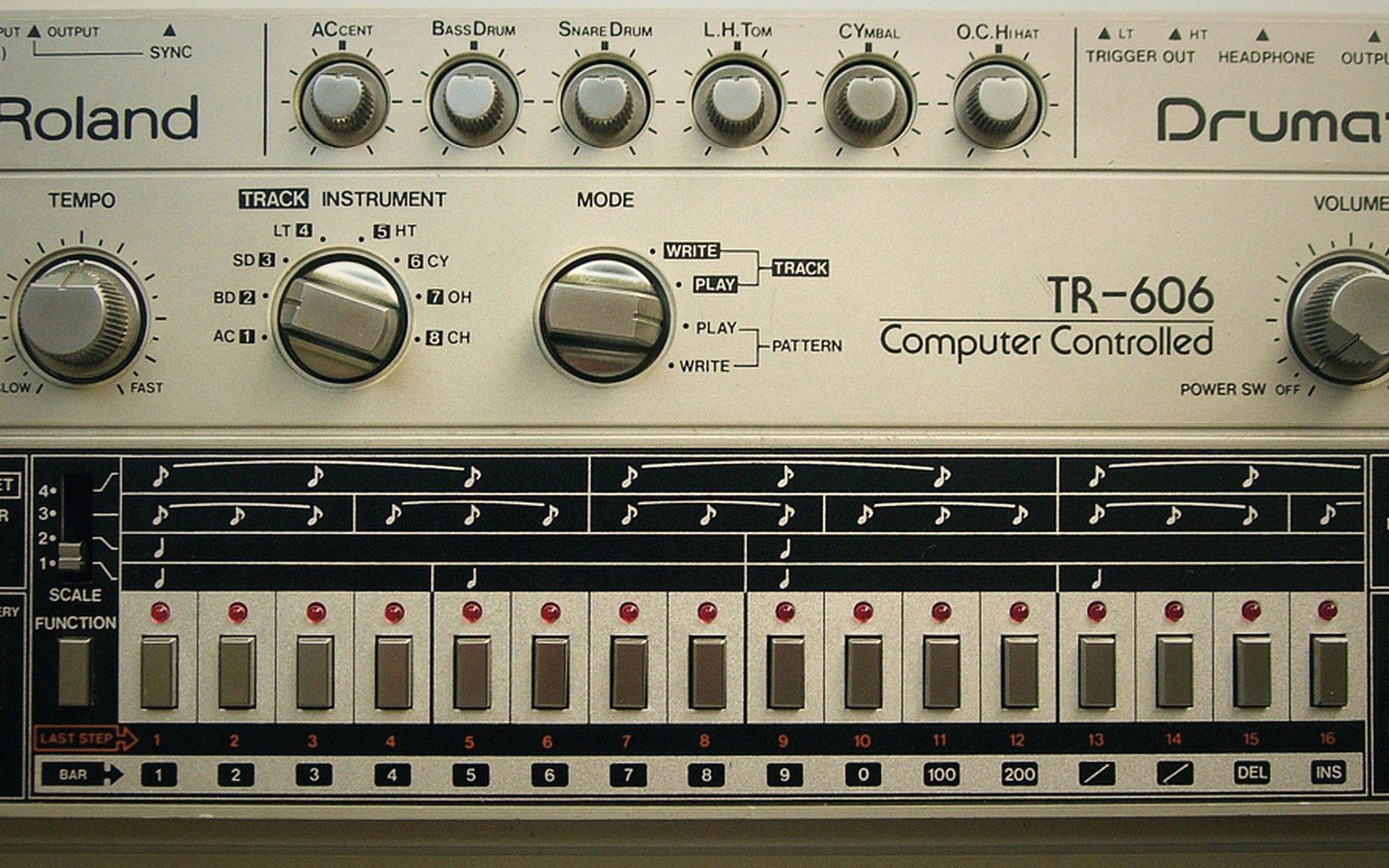
The Roland TR-606 was designed for guitarists. The Casio RZ-1 was marketed as an entry-level sampler for hobbyists. The Yamaha RX series was aimed at recording studios with clean, accurate drum sounds nobody wanted to do anything strange to. In practice, across Buenos Aires, Medellín, São Paulo and Mexico City, these machines ended up in rooms they were never designed for — connected to battered mixers, run through guitar pedals, sampled into pirated software, and made to do things their designers hadn't considered.
That misuse is the story. Not a romantic one about poverty producing creativity, but a precise one about constraints producing signature sound. When a bedroom producer in the early 1990s Río de la Plata had access to one of two drum machines and a four-track cassette recorder, the choices those machines offered — and the ones they refused — became the palette. Cumbia digital and its relatives didn't sound the way they did because producers chose that aesthetic; they sounded that way because the hardware had a fixed set of voices, a fixed set of outputs, and a fixed internal clock that did not negotiate.
What Made the Cheap Boxes Decisive
The TR-606 mattered because it was everywhere and because it had a particular thinness — a hi-hat decay that sat in a specific frequency range and a kick that never quite sat low. Producers working in cumbia and proto-cumbia digital didn't correct for this; they used it. The clipped, papery snare of the 606 became a textural marker across Argentine cumbia villera productions of the late 1990s, identifiable not despite its cheapness but because of it.
The Casio RZ-1, which could hold very short samples on ROM cards alongside its built-in sounds, opened a different door. It let producers drop a single borrowed sound — a bass hit from a record, a vocal fragment, a clave struck on a wooden block — into an otherwise synthetic pattern. In Medellín, where the budgets for studio production the early and later digitally-produced cumbia scenes were tight, this hybrid architecture made the RZ-1 genuinely useful: one machine could handle both the synthetic grid and the sampled exception within it.
The Yamaha RX-11 and RX-17 are less celebrated, but they deserve a place here. Their sounds were recorded samples of acoustic drums played back at fixed pitch, and the resulting stiffness — particularly in the snare, which had a compressed, almost cardboard quality — became recognisable across early Mexican technocumbia and Andean-market productions. These machines were affordable, durable and widely distributed through Latin American music retail chains in the late 1980s and 1990s, which is ultimately the most important fact about them. Ubiquity made the sound.
What connects all of these machines is not sophistication but replicability. A pattern programmed on a TR-606 in one city sounded like a pattern programmed on a TR-606 in another, and that consistency built a shared grammar even across scenes with no direct contact. The shared hardware was the shared language, long before producers were trading files online or reading each other's interviews.
The expensive option — the Akai MPC series, which arrived later and with it a new tier of rhythmic possibility — changed what was possible, but it didn't erase what the cheap boxes had already embedded in the music. Those thin kicks and clipped snares are still in the palette. Producers reach for them deliberately now, which is exactly how a constraint becomes a style.
Related on the spine
Filed in Patterns. Every piece on this site is filed by the tempo it sits at rather than by genre or city — browse the whole spine.